Creating a comfortable and stylish home often comes down to the details that bring a room together. While furniture, lighting, and paint colors establish the foundation of an interior, decorative elements can add depth and personality. Wall molding is a versatile option for homeowners who want to enhance plain surfaces without making major structural changes. With carefully selected decorative wall molding, bedrooms and living rooms can gain an elegant architectural finish that complements both traditional and contemporary decorating styles.
Adding Elegance to Bedroom Walls
The bedroom should feel relaxing, inviting, and visually balanced. Wall molding can help create this atmosphere by introducing subtle patterns and defining important areas of the room. One popular approach is to install rectangular molding panels behind the bed, creating an attractive feature wall that serves as the focal point.
The arrangement should complement the size of the bed and the available wall space. Wider panels can work well behind a large headboard, while smaller frames may suit compact bedrooms. Keeping the layout symmetrical around the bed often creates a calm and organized appearance.
Color also plays an important role. Soft white, warm beige, muted green, and light gray can produce a peaceful atmosphere. Painting the molding in the same shade as the wall creates a subtle, sophisticated effect, while contrasting colors make the architectural details more noticeable.
For a modern bedroom, simple profiles with clean lines can add character without overwhelming the space. Traditional bedrooms may benefit from more detailed molding designs that complement upholstered furniture, classic lighting, and decorative fabrics.
Creating a Welcoming Living Room
Living rooms often serve several purposes, from entertaining guests to relaxing with family. Wall molding can help define the room's style while making the space feel more finished.
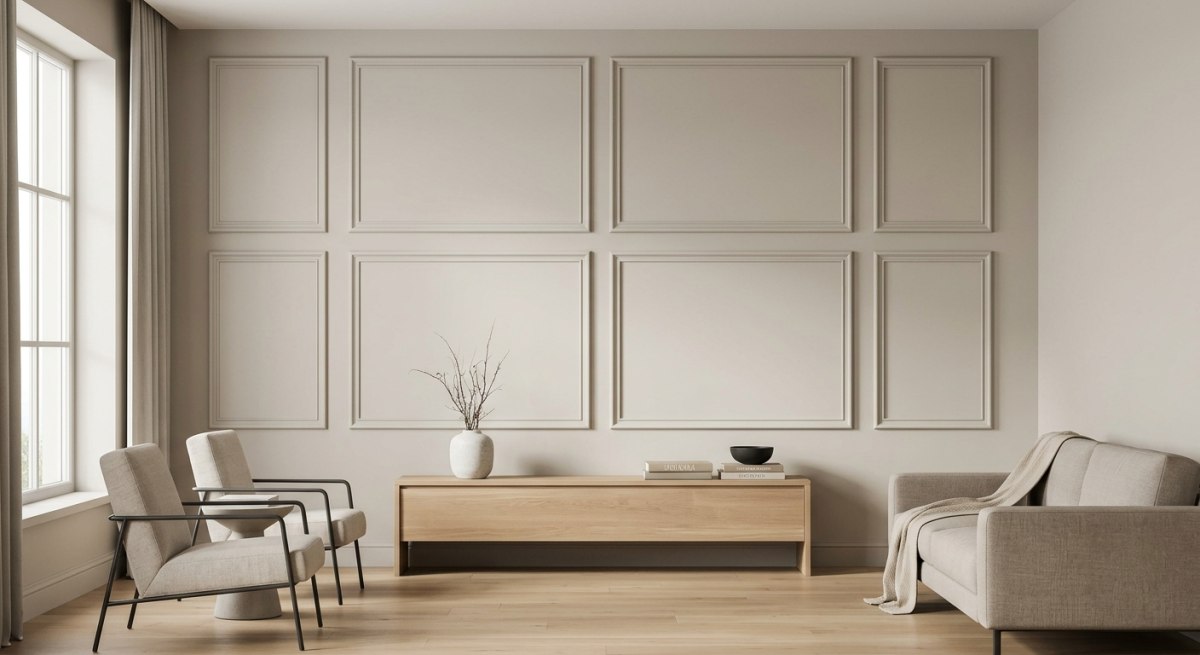
A large wall behind a sofa is an excellent place to introduce decorative panels. Repeating rectangular frames across the surface can create visual rhythm and provide structure without requiring additional furniture or accessories. The panel arrangement should account for the sofa's width, nearby windows, and other architectural features.
Molding can also highlight a fireplace, television wall, or artwork. When used around a central feature, it helps draw attention to that area and creates a stronger visual connection between the wall and the furnishings.
In spacious living rooms, larger panels and wider profiles can establish a sense of proportion. Smaller rooms often benefit from narrower molding and simpler layouts that preserve an open feeling.
Choosing the Right Molding Style
Selecting a suitable profile is essential for achieving a cohesive result. Traditional interiors generally work well with decorative edges, elegant curves, and carefully balanced panel arrangements. Contemporary spaces usually favor minimal profiles, straight lines, and uncluttered geometric shapes.
Polyurethane molding is one option worth considering for residential interiors. It is lightweight, easy to handle, and available in a variety of shapes and designs. Its versatility makes it suitable for framing wall panels, emphasizing architectural features, and creating decorative accents.
Before choosing a profile, consider the existing baseboards, door casings, ceiling details, and furniture. These elements should work together rather than compete for attention.
Planning Color, Spacing, and Placement
Successful molding design begins with accurate measurements. Mark the proposed panel positions before installation and check that the spacing looks consistent across the wall. Uneven gaps or frames that sit awkwardly behind furniture can reduce the overall impact.
Lighting should also influence the final design. Natural daylight and lamps create shadows that reveal the molding's shape, adding dimension to otherwise flat surfaces. Testing paint samples under different lighting conditions can help achieve the intended appearance.
Avoid overcrowding the walls with too many frames or decorative features. Leaving sufficient space between panels allows each element to stand out while maintaining a balanced composition.
Final Thoughts
Decorative molding offers a practical way to bring architectural character into bedrooms and living rooms. From elegant headboard walls to structured living room accents, the right design can improve visual balance and complement existing furnishings. By considering room dimensions, molding profiles, color choices, and placement, homeowners can create inviting interiors that feel coordinated, timeless, and personal. How to Create a Cohesive Interior with Wall Moldings
#PolyurethaneMolding #NeoclassicalInterior #WallTrim